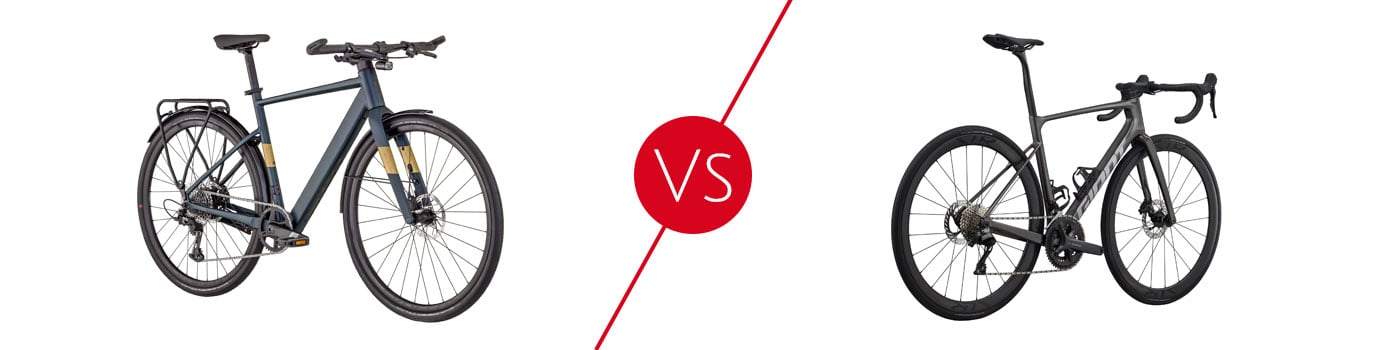
Flat Bar Vs Drop Bar Road Bikes From Scott And Giant
Bikes today are more hardcore and more focused than ever before, this means that it’s too easy to buy a bike which has been designed more for the Tour de France stages VS your Sunday ride out to the local cafe, or your daily commute. In the world of road bikes, there is very much a split between flat bar road bikes - designed for the everyday VS drop bar road bikes - which are designed to provide the quickest and most responsive performance.
Both styles of bike have their benefits and drawbacks - and it’s often a difficult choice when buyers need to prioritise both comfort and performance. Flat bar road bikes hark back to the upright, more comfortable and accessible hybrid bikes, whilst drop bar road bikes hark back to the aerodynamic and traditional road racing bike design. In this post, we look at the two types of road bikes, which type could suit you best - and also look at some of the most exciting offerings from two of our favourite brands - Scott and Giant.
Flat Bars vs Drop Bars
At the very heart of this matter lies two different types of bars. Road Bike Flat Bar Bikes look similar to mountain bikes and hybrid bikes, their bars lie straight - providing a riding position which is upright, and similar to that found on a hybrid bike or a mountain bike. This riding position keeps your torso more vertical, reducing cramp and strain on your lower back, neck and shoulders compared to drop bars. These vertical bars also keep your head up, allowing you to benefit from a commanding view of where you are cycling to and what you are cycling in, great for commuters who ride in traffic. These bars are also usually wider than drop bars, meaning that a more stable riding position can be enjoyed. Simply because a road bike does not have drop bars, does not make it ‘slow’ there are plenty of lightweight, aero designed flat bar road bikes which allow you to put some serious pace down on the roads, but in a more comfortable fashion.
Drop Bar Road bikes have bars, which unlike straight bars - curve both down over and in over - providing the aggressive look and style that we see on race bikes, such as Tour de France Bikes. These bars do provide a few different hand positions - riders can use the tops for relaxed spells, the hoods for control and the drops for tucked in sprint sections and descents. Although more versatile than flat bar road bikes, these bars do lean the rider into a more forward position, which can feel great on open roads - but can become taxing and cramped up over time. Alongside more aggressive riding position thanks to bars, drop bar road bikes often have a more aggressive geometry than flat bar bikes, so whilst not as comfortable as flat bar road bikes, they are quicker and more efficient.
Comfort vs Performance
The balance here is finding the right blend of comfort and performance - and there’s been a lot of research into the benefits and drawbacks of the two different styles of handlebars. Drop Bars for example, reduce aero drag by up to 15% compared to flat bar bikes, this is massively important for time trials, races and even group rides where every watt of power counts. The downside of course, is increased pressure on the hands, neck and back - leaning towards fatigue which can slow a rider down on anything about 40/50k.
Flat Bars distribute weight more evenly across the saddle of the bike and the grips, meaning discomfort spots in the body are reduced. Studies have shown that riders produce around 5% less power on flat terrain, compared to drop bar bikes - but equally, vibrations from the road are reduced via flat bar road bikes by around 20%. Riders also report feeling fresher and less fatigued after longer rides, potentially letting them push harder, for longer.
Rider Feedback on the Forums
There’s plenty of discussion on the subject between riders both in the forum of the local cafe, across to online forums. Many riders feel like when switching to flat bar road bikes, they are riding a safe, more intuitive bike - but do feel like these bikes do not look as cool or as focussed as drop bar road bikes. The crowd is definitely split when it comes to which type of bike is preferred. We think it can be summed up quite well by keeping it simple, flats for comfort, drop bars for performance.
Scott's Flat Bar And Drop Bar Road Bikes
In this post, we look at a few different options for riders looking for flat bar bikes and drop bar bikes, the first brand we look at when it comes to this - is Scott. Scott offers a load of different road bike options, covering endurance road bikes across to race focussed road bikes.
Flat Bar Scott Bike: The Metrix 10
The Carbon fibre framed Metrix 10 is the flagship flat bar road bike for Scott this year, it’s lightweight and a fantastic all rounder, combining road bike levels of speed with urban usability, which makes it the dream commuter. There’s a 12 speed Shimano GRX groupset which provides crisp and reliable shifting, there’s hydraulic disc brakes and clearance for tyres running up to 35 - so poor roads are no problem. As you would expect, there’s a decent geometry - it’s comfortable, and provides all of the upright comfort that we have discussed. We’ve ridden this bike,and it climbs really well, feels really comfortable, and the HMF carbon frame does a really good job of soaking up road buzz and vibrations. It’s a bike which feels fast, and we were regularly hitting between 25-30kmh.
Drop Bar Scott Bike: The Addict Range
Scott’s Addict range combines race day performance with all day poise and capabilities. There’s a few different options available, starting at the entry level Addict 30. The Addict range is known for being one of the most efficient climbing road bikes on the market, providing sharp handling and descents also. The Scott Addict RC is one of the lightest road bikes on the market, and has been described as ‘flawless’. The addict range of bikes can easily clock up multiple hours of 30km/h rides, and this range of bikes is designed for multiple hour trips, although it has drop bars, it’s still sold as a bike which is built for riders spending long days in the saddle, with a 5mm higher stack and 5mm shorter reach over the outgoing model, providing plenty of comfort.
Giant Flat Bar And Drop Bar Road Bikes
Giant Flat Bar Road Bike: Escape 3
At under £600, Giant's Escape 3 Disc remains a great choice for riders looking for an aluminium framed road/hybrid bike - with a carbon fork. Offering extraordinary value for money, this bike has 700c wheels and 32mm tyres, the gearing is taken care of by the Shimano Altus and there’s also Tektro hydraulic disc brakes. The riding position is back friendly as well, and there’s plenty of rack mounts for utility. The bike feels planted, and can easily achieve speeds of up to 25/kmh on commutes, although the bike is a basic specification, it still gets you everywhere you want to go, with ease.
Giant Defy Advanced: Drop Bar Road Bike
The Defy Advanced is a true endurance bike icon, and the price range has all budgets covered, starting from around £2,500 rising up to in excess of £10,000. All models provide the right balance of performance, comfort and geometry - and all use drop bars allowing riders to choose between multiple different hand positions.m The top models weigh as little as 7.8kg, these bikes climb really well, and the carbon frame models soak up road vibrations and buzz really well. It’s more than achievable to ride for prolonged periods of time over 32kmh.
Flat Bar VS Drop Bar Road Bikes
It really is horses for courses, with bikes such as the Scott Metrix and Giant escape offering really good options for riders looking for comfortable bikes, which still perform, those looking for drop bar bikes, will do well to consider what we believe are two stalwarts of the drop bar road bike range, the Addict and the Defy.
Across our site you will find our full collection of road bikes, and if you have any questions about which bike will be the most appropriate and most comfortable for your needs - get in touch and we will be happy to answer your questions.